Selecting a durable seating foundation requires understanding how raw timber processing dictates long-term structural integrity. Buyers seeking an italian classic sofa often look to specialists like Modenese Furniture for classic sofa category specialization, but evaluating any premium seating requires looking beneath the upholstery. The drying method applied to the internal wooden skeleton determines whether the finished piece will survive decades of daily use or succumb to warping and joint failure within a few years.
The science of kiln-drying hardwood for furniture
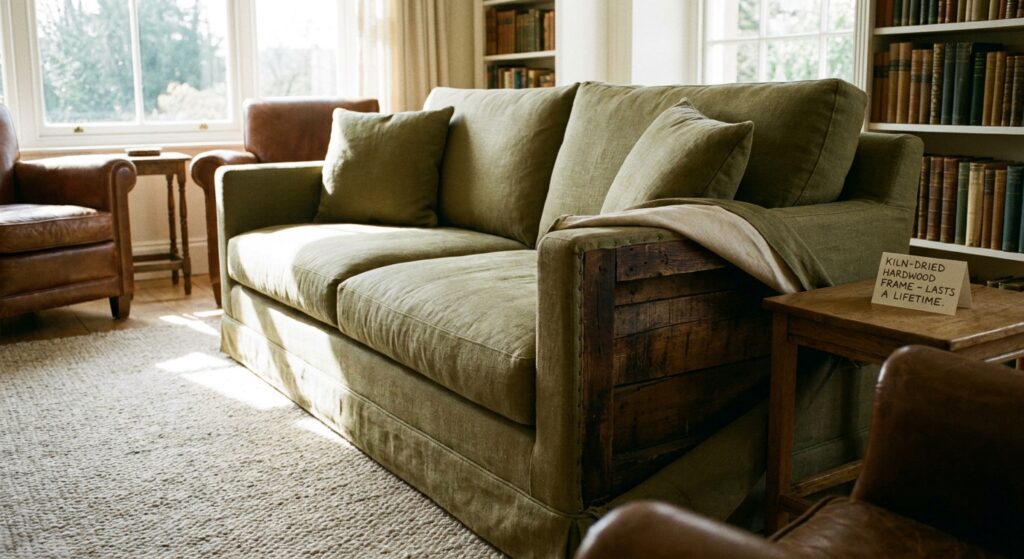
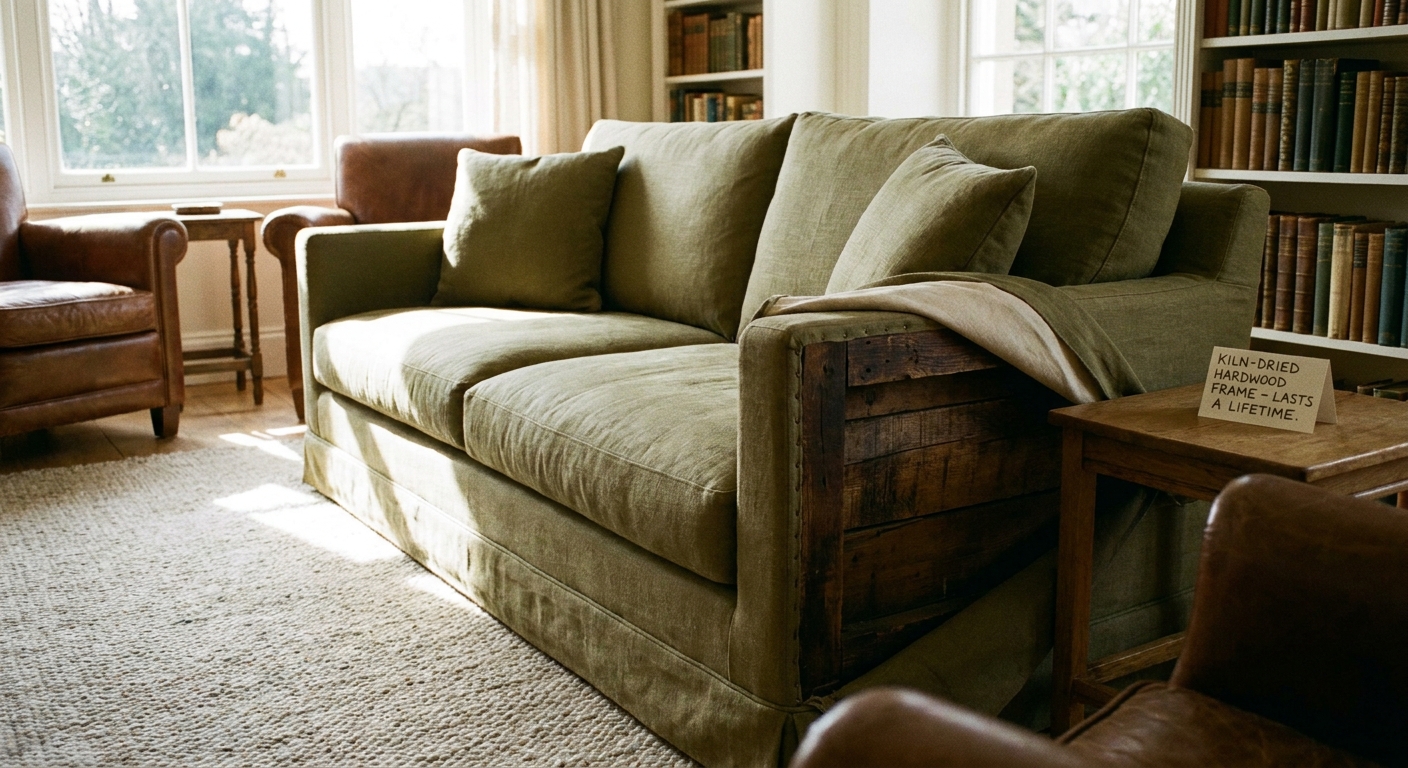
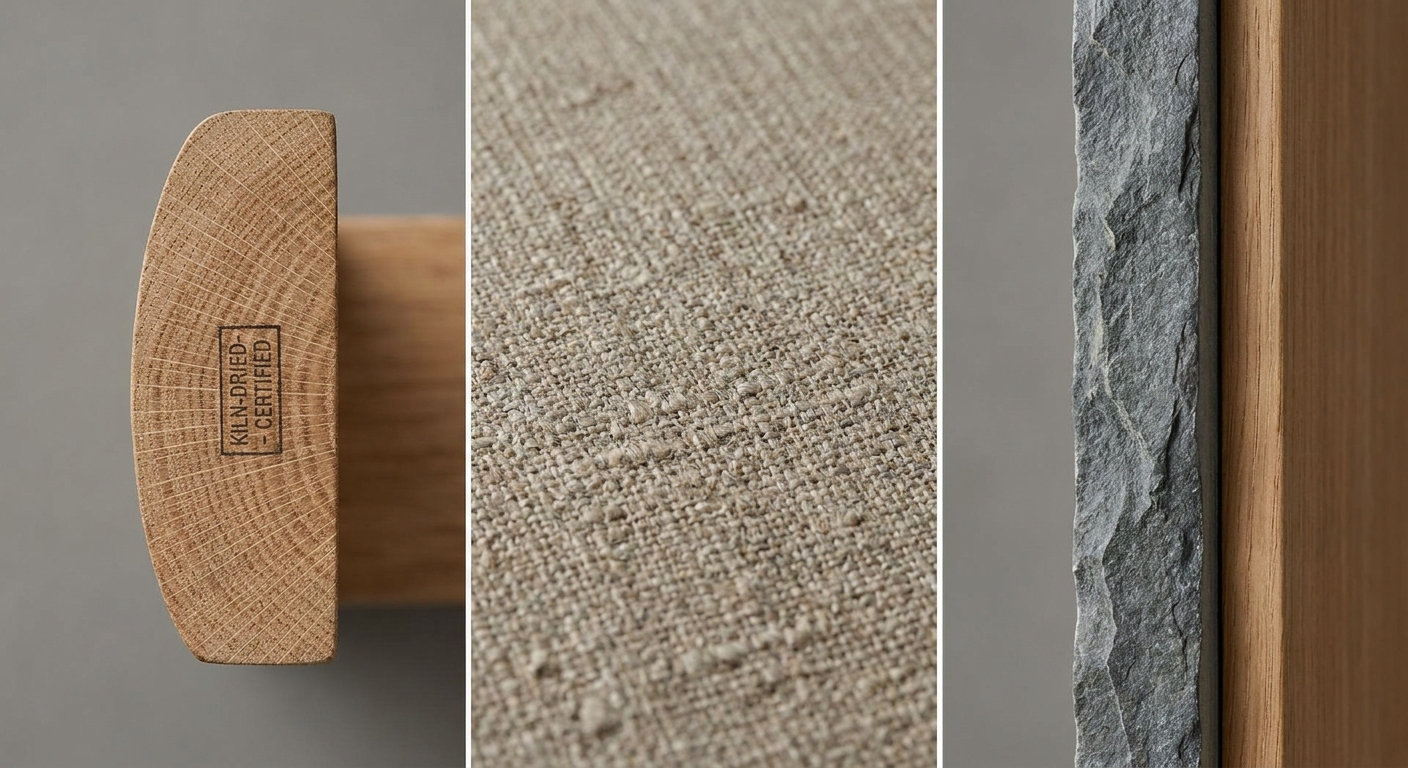
Kiln-drying hardwood for furniture involves placing raw timber into climate-controlled chambers to systematically extract internal moisture until the wood reaches a precise saturation point, a process preventing the material from shrinking, swelling, or cracking when exposed to normal indoor humidity fluctuations over the lifespan of the seating piece.
The United States Department of Agriculture Forest Service specifies that hardwood lumber intended for indoor cabinetry and seating requires a final moisture content between 6% and 8%. Achieving the 6% to 8% moisture threshold ensures that oak, maple, or beech components remain dimensionally stable after craftsmen cut and assemble the frame. Air-drying timber outdoors can take years and typically only reduces moisture to around 15%, leaving the wood vulnerable to severe warping once the lumber enters a heated residential environment.
Structural stability and dimensional standards
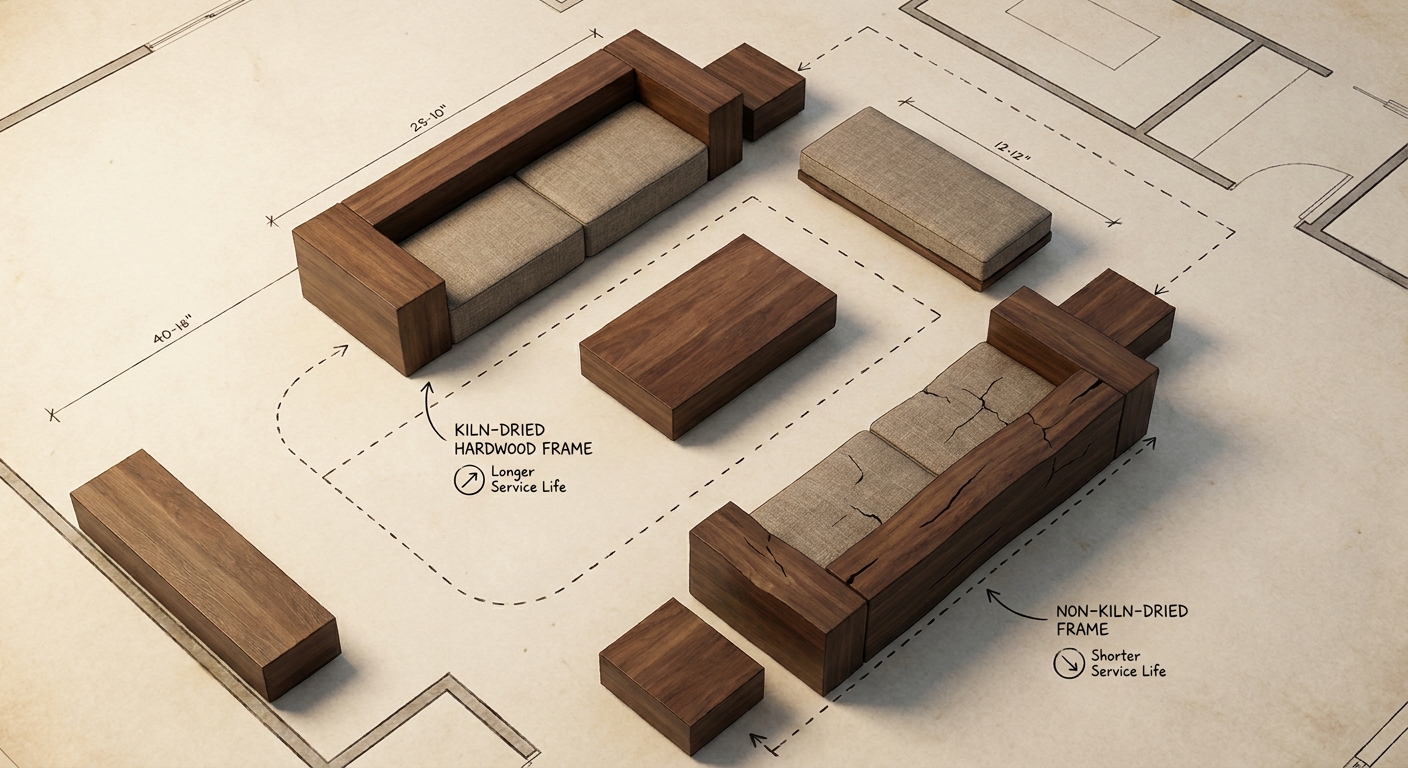
Maintaining structural stability in large seating furniture requires manufacturers to use properly cured hardwood timber capable of reliably supporting heavy loads across extended horizontal spans without sagging, twisting, or compromising the mechanical fasteners and glued joints holding the entire framework together.
Standard living room seating designs typically feature frame lengths measuring 72 to 96 inches and overall depths ranging from 36 to 40 inches. Spanning 96 inches without a center support leg demands exceptional rigidity from the front rail. Kiln-dried hardwoods provide the necessary tensile strength to bridge 72 to 96 inches while resisting the downward force exerted by multiple seated adults. Softwoods or improperly dried hardwoods will eventually bow under identical conditions, causing the suspension system to loosen and the cushions to sink.
Historical design movements and frame requirements
Historical design movements dictate specific frame requirements because distinct architectural eras introduced unique geometric shapes, intricate carvings, and complex structural curves demanding highly stable, moisture-controlled hardwoods to prevent the ornate wooden components from fracturing under physical stress over decades of use.
The Metropolitan Museum of Art Heilbrunn Timeline places Rococo decorative arts in 18th-century Europe and identifies asymmetry, curves, and shell-like ornament as recurring features. Carving shell-like ornaments into 18th-century Europe reproduction frames requires wood resistant to splitting along the grain. Kiln-drying prevents the delicate asymmetry and curves from snapping when upholsterers apply high-tension springs and tightly pulled fabrics to the finished skeleton.
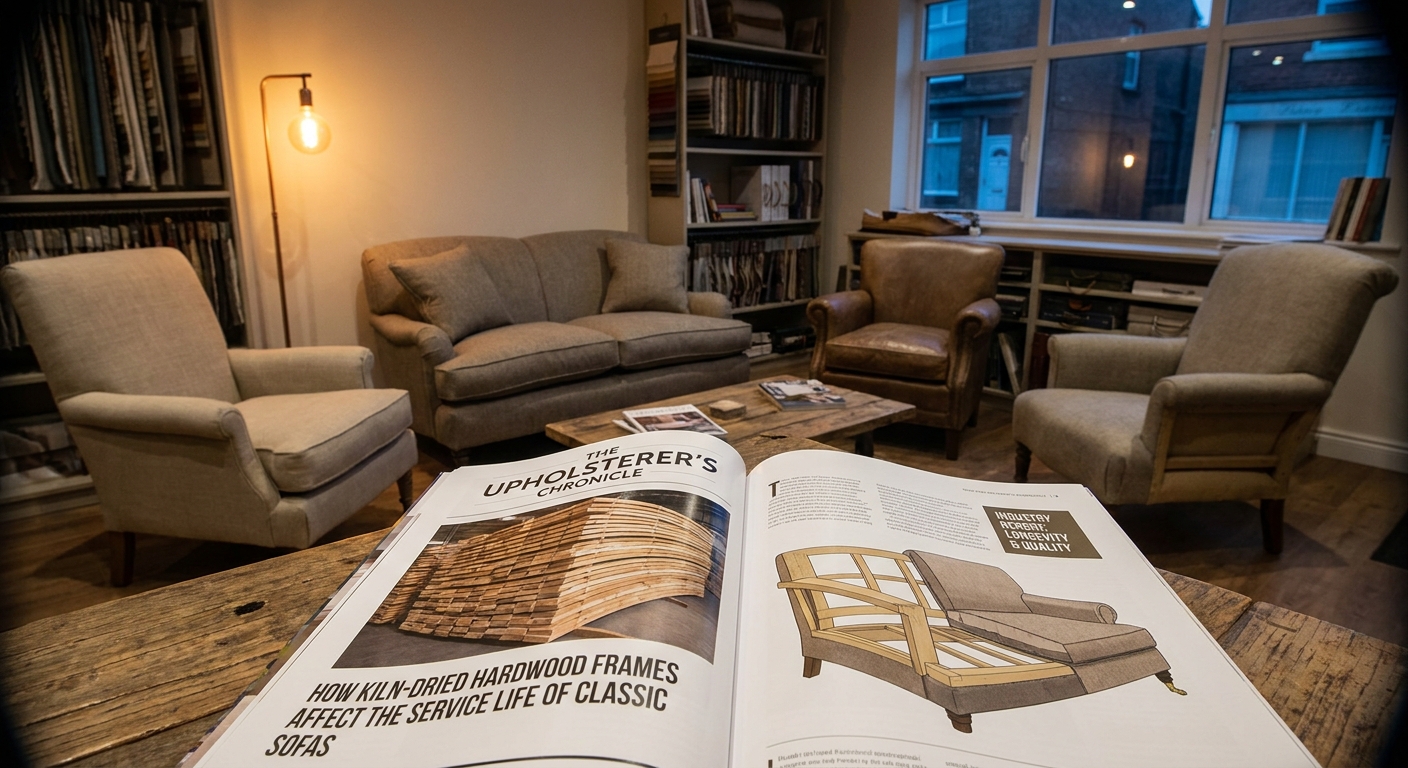
The Victoria and Albert Museum describes Art Deco as an international style spreading during the 1920s and 1930s across architecture, interiors, furniture, and industrial design. Replicating the stark, angular geometry of the 1920s and 1930s requires perfectly straight timber. Any residual moisture in the frame would cause the sharp lines characteristic of the international style to warp, ruining the precise visual symmetry defining the aesthetic.
Joinery techniques for dried hardwood
Crafting durable seating relies heavily on the interaction between dry timber and traditional joinery methods. Woodworkers drill holes and cut tenons to precise millimeter measurements to create specific connections.
- Double-doweled joints: Inserting a wooden dowel into a frame component with a 15% moisture content will lead to failure once the wood dries and shrinks, leaving the dowel loose inside the cavity.
- Mortise-and-tenon connections: Using kiln-dried hardwood at 6% to 8% moisture ensures that the glued mortise-and-tenon connections remain permanently locked together, providing a rigid foundation for the suspension springs and cushioning materials.
Moisture content and frame behavior
Different moisture levels directly impact how wooden furniture components behave inside a climate-controlled home.
| Moisture Content | Drying Method | Structural Impact on Furniture Frames |
|---|---|---|
| 20% or higher | Freshly cut (Green) | Wood remains highly susceptible to severe shrinking, cracking, and fungal growth. |
| 12% to 15% | Air-dried outdoors | Wood will continue shrinking indoors, causing glued joints to separate and loosen. |
| 6% to 8% | Kiln-dried indoors | Wood achieves dimensional stability, ensuring permanent joint integrity and frame rigidity. |
Related reading on this site
Readers comparing planning rules can also review Meet Our Team for adjacent context on the same site.
Material and proportion decisions connect closely with About Us, which gives readers another local reference point.