The majlis remains the architectural and social nucleus of Emirati residences, from compact urban apartments to expansive villa design Dubai projects across Emirates Hills and Al Ain. Contemporary homeowners face a design challenge: preserving the majlis’s ceremonial function while incorporating European furniture systems engineered for different spatial logic and user behaviors. Italian manufacturers offer modular seating platforms, low-profile frames, and customizable upholstery programs that can be reconfigured to meet majlis requirements, but successful integration demands precise understanding of both cultural protocols and technical specifications.
Cultural Architecture of the Majlis Space
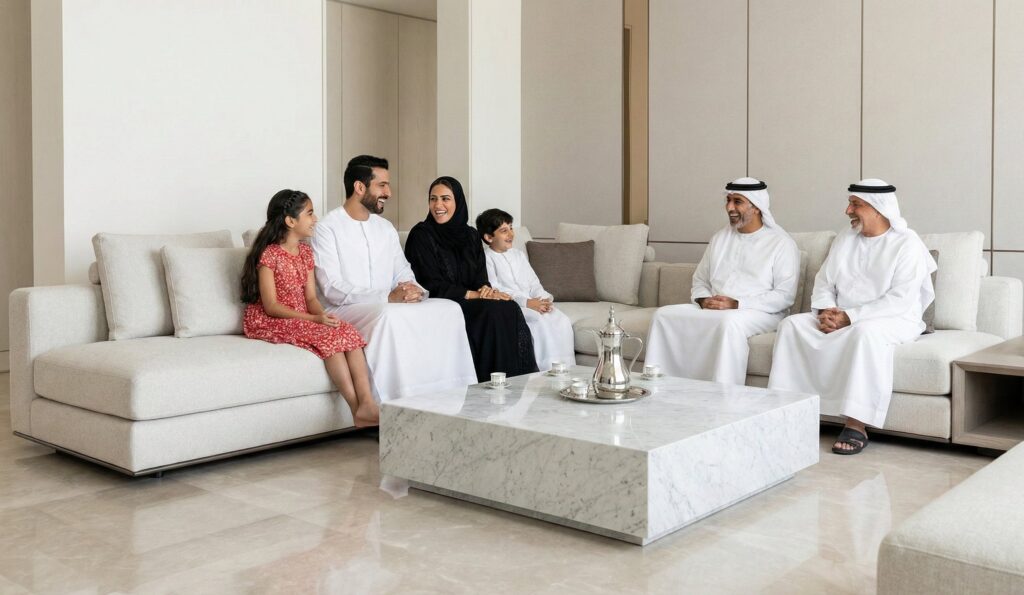
The majlis functions as a formal reception area where family heads conduct social obligations, business discussions, and community arbitration. Historically organized around floor cushions and perimeter seating, the space prioritizes hierarchical visibility, acoustic clarity for conversation, and physical separation of public and private family zones. Research from the Aga Khan Trust for Culture documents that traditional majlis configurations allocate 2.2 to 2.8 square meters per seated guest, significantly exceeding Western living room density standards of 1.5 to 1.8 square meters per person.
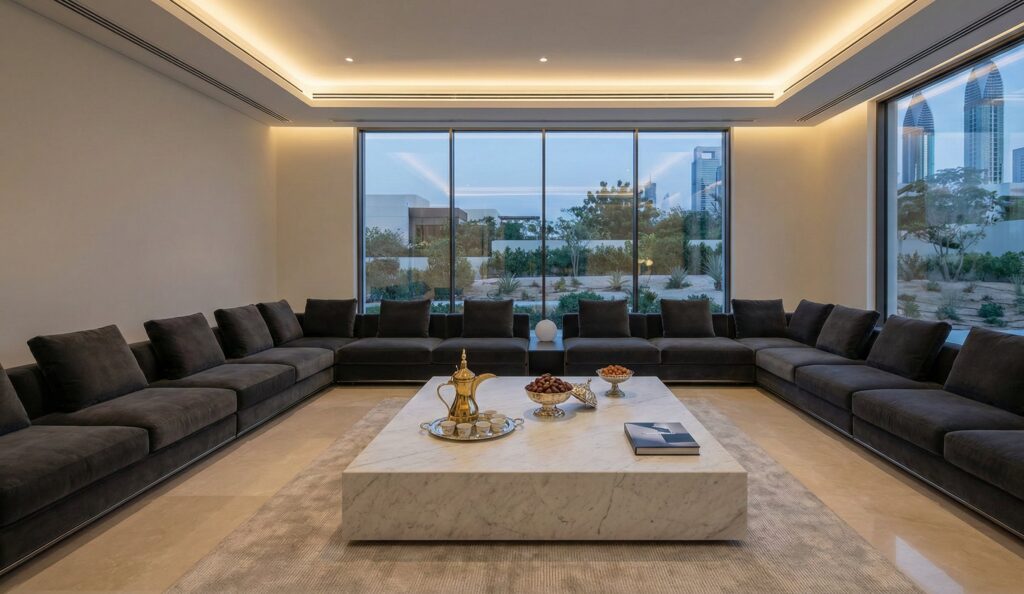
Modern majlis design maintains three non-negotiable elements: perimeter seating orientation facing inward, elevated host positioning (even if subtle), and clear circulation corridors measuring minimum 120 centimeters wide. The evolution toward furniture-based rather than floor-based seating emerged primarily in the 1990s as younger generations sought ergonomic support for extended gatherings while older family members required accessible seating heights. This transition created demand for furniture that reads as formal and ceremonial rather than casual or recreational.
Dimensional Requirements and Spatial Planning
Italian seating systems require significant adaptation to function within majlis spatial parameters. Standard Italian sofas measure 85 to 95 centimeters in depth, while majlis-appropriate seating typically ranges from 95 to 110 centimeters to accommodate the semi-reclined posture customary during long conversations. Seat height presents another critical variable: traditional majlis seating sits at 35 to 40 centimeters from floor level, compared to Western standard of 45 to 48 centimeters.
| Specification | Western Standard (cm) | Majlis Requirement (cm) | Adaptation Strategy |
|---|---|---|---|
| Seat Depth | 85-95 | 95-110 | Custom cushion extensions |
| Seat Height | 45-48 | 35-40 | Modified frame legs |
| Back Height | 75-85 | 65-75 | Lower upholstered shells |
| Arm Height | 60-65 | 50-55 | Coordinated lowering |
Perimeter seating configurations demand modular systems capable of forming continuous L-shaped or U-shaped arrangements measuring 8 to 14 linear meters. Corner units must execute true 90-degree angles rather than the splayed orientations common in Italian sectional programs. Solomia Home specifications for majlis projects typically require minimum 12 modular units to complete a functional perimeter layout in spaces ranging from 45 to 75 square meters.
Italian Brands and Adaptable Systems
Specific Italian manufacturers have developed customization protocols compatible with majlis requirements. B&B Italia’s Tufty-Time system provides low-profile components (38-centimeter seat height) with deep cushioning that can be specified at 105-centimeter depth. The modular geometry allows architects to construct perimeter runs without visible seams or proportion breaks. Flexform’s Groundpiece collection was engineered specifically for low seating applications, with base frames sitting 32 centimeters above finished floor and optional cushion builds reaching 42 centimeters total height.
Minotti’s Freeman seating system offers another viable platform through its coordinate lowering option, which reduces standard seat height by 8 centimeters while maintaining structural integrity. The system’s corner units execute precise 90-degree joinery, and armrest profiles can be specified in reduced heights (52 centimeters) that align with majlis proportions. For projects requiring bespoke solutions, manufacturers like Poltrona Frau maintain custom workshop divisions that engineer frame modifications, altered cushion densities (typically 35 to 45 kilograms per cubic meter for majlis applications), and specialized upholstery mounting systems.
Low-Profile Italian Solutions
Several Italian brands have introduced collections specifically engineered for reduced height applications, though few market them explicitly for Middle Eastern contexts. Living Divani’s Extrasoft series features seat platforms at 34 centimeters with cushion systems that compress to 38 centimeters under load, creating a lounging geometry appropriate for extended majlis sessions. The collection’s modular units include backless daybed components that can function as transitional seating or prayer-appropriate platforms.
Cassina’s 8-Cube system provides unusual flexibility through stackable cushion modules that users can configure at variable heights. A three-cushion stack creates traditional floor seating at 25 centimeters, while a five-cushion arrangement yields 40-centimeter majlis height. The system’s cubic geometry facilitates rapid reconfiguration for different event scales or hosting requirements.
Material and Fabric Engineering
Majlis upholstery must satisfy competing demands: visual formality, tactile luxury, and practical durability under high-frequency use. Italian fabric houses supply technical textiles engineered for these conditions. Rubelli’s Maestri collection includes heavyweight velvets (650 to 780 grams per linear meter) with stain-resistant treatments that maintain the sumptuous hand-feel expected in formal settings. According to ASTM International textile standards, commercial-grade upholstery for high-traffic hospitality applications should exceed 50,000 double rubs on the Wyzenbeek abrasion test; majlis-appropriate fabrics typically test between 60,000 and 100,000 double rubs.
Silk-blend damasks remain culturally preferred for their association with ceremonial contexts, but contemporary formulations incorporate synthetic fibers (typically 30 to 40 percent polyester or acrylic) to improve cleanability and prevent pile crushing. Dedar’s Hermitage collection exemplifies this hybrid approach, combining mercerized cotton warps with synthetic wefts to produce fabrics that photograph as pure silk but tolerate professional steam cleaning. Moisture management presents another critical specification: UAE’s humidity fluctuations (30 to 80 percent relative humidity seasonally) require fabrics with dimensional stability and mold resistance.
Leather applications in majlis contexts favor full-aniline finishes in deeper tones (burgundy, navy, charcoal, forest green) that signal formality. Italian tanneries like Poltrone Frau’s Pelle Frau leather grades offer color consistency across large seating runs and maintain suppleness in climate-controlled environments (22 to 24 degrees Celsius). Semi-aniline leathers with light protective topcoats provide practical alternatives for families with children, though they sacrifice some tactile authenticity.
Male and Female Majlis Planning
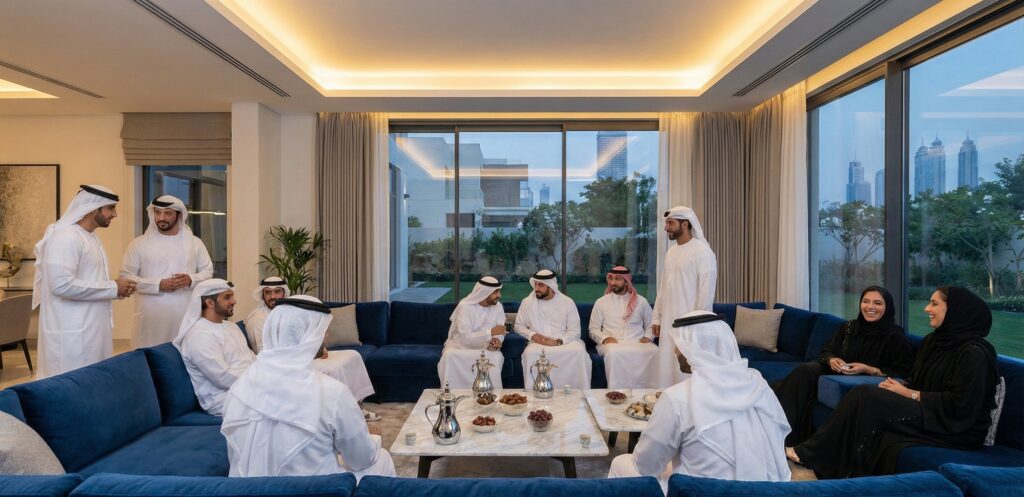
Emirati residences typically maintain separate majlis spaces for male and female gatherings, each requiring distinct furniture specifications and spatial organizations. Male majlis areas prioritize robust construction, larger-scale proportions, and material palettes reading as authoritative. Female majlis spaces permit more decorative elaboration, lighter color schemes, and varied seating heights to accommodate diverse age groups and mobility levels.
Male majlis furniture from Solomia Home and comparable suppliers typically specifies frame constructions in solid hardwood (beech, oak) with reinforced joinery capable of supporting 150 kilograms per seat position. Upholstery tends toward structured, high-back profiles (70 to 75 centimeters) that convey dignity and support extended upright posture. Seating depths remain conservative at 95 to 100 centimeters to maintain formal bearing.
Female majlis furniture permits greater range in seat heights (38 to 45 centimeters) to serve elderly guests requiring higher positions and younger participants comfortable with lower seating. Back profiles can incorporate varied angles (100 to 110 degrees from seat plane) rather than the uniform 95 to 105 degrees standard in male spaces. Decorative elements like contrast piping, button tufting, and carved wood details appear more frequently, though always executed in refined rather than ornamental character.
Spatial Adjacencies
Female majlis areas often connect directly to family dining zones or informal living spaces, requiring furniture that transitions gracefully between formal reception and casual family use. Modular systems with reversible cushions (formal fabric on one face, durable performance fabric on reverse) provide functional flexibility. Male majlis spaces maintain stricter separation from family areas, typically accessing directly from entrance foyers or dedicated circulation corridors measuring minimum 150 centimeters wide to accommodate robed guests.
Discreet Technology Integration
Contemporary majlis design incorporates climate control, lighting, and entertainment systems without visible technology intrusion. Italian furniture manufacturers have developed cable management solutions, integrated USB charging ports, and concealed control interfaces compatible with majlis furniture profiles. Poliform’s customization workshop can embed wireless charging surfaces (Qi-standard, 15-watt capacity) within armrest caps or side table surfaces, finished in materials matching primary upholstery.
Lighting control presents particular challenges in majlis contexts where ambiance must transition from bright midday receiving to intimate evening gatherings. Studies from the Illuminating Engineering Society recommend minimum 300 lux for detailed conversation spaces, but majlis environments typically operate at 200 to 250 lux to create subdued, contemplative atmosphere. Lighting systems integrate through perimeter cove details, recessed floor uplights, and chandelier statements rather than furniture-mounted sources.
Audio-visual systems for entertainment or presentation purposes require acoustic planning that preserves the majlis’s conversational clarity. Sound-absorbent upholstery (noise reduction coefficient 0.35 to 0.45) helps control reverberation in high-ceilinged spaces, while concealed speaker arrays (typically 4 to 6 satellite units) distribute sound evenly without visual clutter. Control interfaces mount in discrete wall panels or custom side tables rather than visible on primary seating furniture.
Complementary Furniture Elements
Italian coffee table collections require careful selection for majlis compatibility. Tables must sit low (28 to 35 centimeters height) relative to Western standards (40 to 45 centimeters) while providing adequate surface area for serving traditional hospitality items. Rectangular or oval geometries measuring 140 to 180 centimeters long and 60 to 80 centimeters wide accommodate coffee service, date presentations, and small plate offerings for 8 to 12 guests.
Storage furniture serves critical functions in majlis spaces for maintaining the ceremonial emptiness essential to formal reception. Italian credenzas and console systems measuring 200 to 280 centimeters wide provide concealed storage for serving items, extra cushions, and prayer materials. Units should maintain low profiles (75 to 85 centimeters total height) to preserve wall sight lines and not compete with seating furniture. Molteni&C’s Gliss Master closet systems can be adapted for majlis applications, with custom interior configurations for specialized storage requirements.
Side tables positioned at seating ends must coordinate with reduced seat heights, typically specifying at 38 to 42 centimeters to maintain functional relationship with armrests. Circular or hexagonal geometries (45 to 55 centimeters diameter) provide adequate surface area without obstructing circulation. Materials should echo primary furniture specifications, often combining stone tops (marble, granite, onyx) with metal or wood bases.
Contemporary Majlis Case Studies
A 2023 Emirates Hills residence designed by Spazio Interior demonstrates successful Italian furniture integration in a 68-square-meter male majlis. The project specified Minotti’s Freeman system with custom lowering modifications (seat height reduced to 38 centimeters) arranged in a 13-meter U-configuration. Upholstery combined Rubelli’s Venezia velvet in deep sapphire with contrast welting in antique gold. The installation accommodates 18 seated guests with 2.4 square meters per person, exceeding traditional density standards while maintaining contemporary comfort.
An Al Ain villa completed in 2024 by Antonovich Design featured dual majlis spaces totaling 115 square meters. The female majlis incorporated B&B Italia’s Tufty-Time in custom 105-centimeter depth with Dedar’s Sahco linen-silk blend in champagne tones. The male majlis specified Poltrona Frau’s Archibald seating modified to 36-centimeter seat height, upholstered in Pelle Frau Nest leather (color 3041 Moka). Both spaces integrated Molteni storage systems with interior configurations customized for traditional hospitality items and modern technology components.
A 2024 Abu Dhabi apartment conversion by LW Design Group addressed space constraints in a 42-square-meter combined living-majlis area. The solution employed Flexform’s Groundpiece system in an L-configuration measuring 8.5 linear meters, creating dedicated majlis function while permitting family use. Modular units specified at 38-centimeter height with performance velvet upholstery (Kvadrat’s Steelcut Trio, 100,000 Martindale rating) balanced formal presentation with practical durability requirements for daily use.
Custom Commissioning Process
Commissioning Italian furniture for majlis applications follows a structured specification workflow. Initial space planning establishes total linear meters required, corner unit quantities, and any specialized components (backless daybeds, prayer platforms, elevated host seating). Dimensional modifications must be documented precisely: seat height reductions, depth extensions, back height alterations, and arm height coordinations all require engineering review to maintain structural integrity and warranty coverage.
Fabric and leather specifications should reference Italian mill standards and include physical strike-offs (30 by 30 centimeter samples minimum) for approval under actual lighting conditions. Color matching across production lots requires coordination between furniture manufacturer and textile supplier; specify color tolerance limits (typically Delta E less than 1.5 for critical matches). For large installations exceeding 12 meters of seating, request phased delivery to verify first-production units before completing full manufacture.
Lead times for custom Italian majlis furniture typically extend 16 to 24 weeks from order confirmation, with additional 4 to 6 weeks for international shipping and customs clearance to UAE destinations. Installation requires specialized teams familiar with Italian furniture assembly systems and majlis spatial requirements. Final styling should incorporate traditional hospitality elements (brass coffee service, decorative cushions, incense burners) that signal cultural function while complementing contemporary Italian furniture design.
The successful integration of Italian furniture systems within majlis contexts demonstrates that cultural tradition and contemporary design methodology can coexist when projects prioritize technical precision over superficial aesthetic fusion. Manufacturers like Solomia Home and established Italian brands continue developing customization protocols that respect both engineering standards and ceremonial requirements, enabling Emirati households to maintain hospitality traditions within furniture frameworks engineered for modern comfort and longevity.