Choosing a studio or contractor is not mainly a branding or price decision. The decisive question is who remains responsible when drawings conflict, imported goods arrive late, or cooling, lighting and smart-home systems fail during handover.
A villa owner wants controlled delivery, but fragmented responsibility can produce rework, disputed variations, delay and warranties divided among several suppliers. The practical goal is therefore to appoint a complete responsibility chain, not simply a company with an attractive portfolio.
Which delivery model is right for a Riyadh villa?
Choose separate designer and contractor appointments for independent oversight, design-and-build for one contractual delivery lead, or direct specialist appointments only when a professional team can coordinate them.
A design studio prepares and documents the design. A main fit-out contractor constructs and coordinates the work. A design-and-build company contracts for both functions. Client-appointed specialists supply defined packages, while a project manager coordinates delivery and a quantity surveyor monitors cost. Marketing descriptions such as “turnkey” do not establish these obligations.
A separate designer and contractor suit owners who want independent design oversight
- Choose separate appointments to preserve design scrutiny. This model supports tender competition and independent inspections, but it creates an interface between design drawings, contractor shop drawings and mechanical, electrical and plumbing coordination.
Design-and-build suits owners who want one contractual delivery lead
- Choose design-and-build to simplify communication. Require measurable employer requirements, named designers, controlled substitutions and transparent exclusions. Confirm that the signing legal entity accepts both design and construction responsibility.
Direct specialist appointments suit owners with professional coordination capacity
- Choose direct appointments to control selected packages. Kitchens, stone, pools, lifts and automation can be bought directly, but the owner otherwise assumes interface, delay, damage and split-warranty risk.
Keep baseline performance requirements independent of the appointment model. For example, ENERGY STAR states that qualified LED lighting uses at least 75 percent less energy and lasts up to 25 times longer than incandescent lighting. Where accessible clear space is used as an international design reference rather than a Saudi requirement, the 2010 ADA Standards specify 30 by 48 inches for wheelchair positioning.
Verify the organisation that will enter the villa as well as the entity signing the contract. For eligible activities, the Ministry of Municipalities and Housing explains that domestic-service permits are linked to the establishment’s registered licence and remain subject to municipal approval.
The three Riyadh villa delivery models assign responsibility differently
Separate appointments divide design and construction responsibility, genuine design-and-build combines both under one appointment, and direct specialist contracting leaves the owner responsible for integration.
- Compare separate appointments to gain independence. Expect stronger design control and competitive tendering, but confirm who resolves conflicts between the consultant’s drawings, contractor shop drawings and specialist information.
- Compare design-and-build to gain one contractual route. Confirm that one entity remains liable for interiors, MEP coordination, procurement, mock-ups, testing, defects and handover. A contractor that merely schedules owner-appointed suppliers does not provide single-point responsibility.
- Compare direct packages to gain purchasing control. Package prices may be visible, but the total cost becomes less certain when builders’ work, storage, access, damage, testing and programme effects sit outside supplier quotations.
Check the legal entity, scope, exclusions, named consultants, subcontractors, approval route and owner-supplied items for every model. The Ministry of Municipalities and Housing states that eligibility for the cited domestic-services permit requires the underlying commercial-premises licence to remain valid for at least six months and not be suspended, alongside the service’s other conditions.
Separate appointments preserve independence but create contractual interfaces
Appoint the designer to prepare coordinated design information and review contractor submissions against design intent. Appoint the contractor to produce shop drawings, coordinate specialists and remain responsible for construction. Give the consultant authority to instruct, assess variations or verify progress only through the signed appointment.
Design-and-build reduces interfaces only when the scope is genuinely integrated
Require the design-and-build entity to identify its design team and accept responsibility for included design, construction and commissioning. After selecting the structure, compare Riyadh villa interior design proposals before signing so that exclusions, allowances and price bases can be assessed consistently.
A responsibility matrix should be agreed before Riyadh villa work starts
Assign every drawing, approval, purchase, installation, test, defect and warranty before mobilisation. A sample approval or shop-drawing review does not transfer performance responsibility unless the contract expressly provides for that transfer.
Define each action clearly. “Prepares” means produces the document. “Reviews” means checks it within the reviewer’s discipline. “Approves” means authorises the stated next step. “Coordinates” means resolves interfaces. “Accepts” records contractual receipt. “Remains liable” means responsibility for compliance, workmanship or performance continues.
A responsibility matrix should be agreed before Riyadh villa work starts shown with floor, wall, and fixture relationships visible.
- Assign drawings to remove design gaps: the designer prepares design information, the contractor produces installation shop drawings, engineers review their disciplines, and the project manager controls issue status.
- Assign submittals to control quality: the contractor submits technical data, samples and mock-ups; the designer reviews appearance; engineers review technical compliance; and the owner approves only matters reserved for the owner.
- Assign procurement to protect the programme: name who releases orders, verifies dimensions, tracks production, receives goods and accepts delay or currency risk.
- Assign installation to preserve accountability: the contractor coordinates setting out and builders’ work, while each specialist remains responsible for its workmanship and product requirements.
- Assign testing to produce usable systems: contractors perform tests, engineers witness specified tests, and the project manager verifies that records are complete.
- Assign defects to secure correction: the owner reports defects, the project manager tracks closure, and the responsible contractor or supplier corrects the cause.
- Assign warranties to preserve aftercare: identify who registers each warranty, holds original documents and coordinates claims after handover.
Who owns shop drawings and MEP coordination?
Require installation-ready coordination before fabrication. A reflected ceiling drawing should reconcile the air-conditioning grille, downlight, detector, access panel, curtain pocket and joinery head. Equipment schedules should confirm circuits, drainage, cooling requirements and maintenance access.
Who approves samples, mock-ups, and substitutions?
Separate aesthetic approval from technical and commercial acceptance. Record each substitution’s reason, origin, performance, sample, warranty, cost and programme effect. For stone care, the Natural Stone Institute warns that abrasive powders and creams can scratch natural stone.
Who remains responsible at testing, handover, and defects stages?
Assign named parties to test HVAC balancing, lighting controls, smart-home scenes, water systems, appliances and pool equipment. Make the matrix consistent with signed appointments, applicable Saudi requirements and mandatory law, with Saudi-qualified legal and technical review.
Villa complexity and owner control should determine the delivery model
Choose according to technical interfaces, imported packages, programme pressure, documentation quality and owner availability, not villa area or budget alone.
Choose consolidated design-and-build for a standard interior completion to simplify accountability where layouts are settled and finishes are repeatable. Require coordination of cooling, dust-resistant entrances, privacy zoning, family circulation, guest routes and majlis servicing.
Bespoke villas need stronger independent design and cost controls
Choose separate oversight for a bespoke villa to protect design intent across custom joinery, natural stone, decorative lighting, automation and imported finishes. Add a project manager and quantity surveyor when mock-ups, confidentiality, supplier interfaces and cost reporting require independent records.
Occupied villa renovations need one operational site lead
Appoint one operational lead for an occupied renovation to control security, temporary cooling, noisy work, protected family routes, dust isolation and daily cleaning. Survey existing services before demolition and define who decides when concealed ducts, wiring or plumbing differ from the available drawings.
Plan material use and ventilation as part of the phasing strategy. The U.S. Environmental Protection Agency identifies paints, varnishes, building materials and furnishings as potential indoor sources of volatile organic compounds and recommends increased ventilation during the use of emitting products.
Villa complexity and owner control should determine the delivery model shown with finish, fixture, and clearance relationships visible.
Retain professional coordination for owner-supplied packages to prevent gaps between kitchens, lighting, sanitaryware, lifts, automation and furniture.
Score each model to expose the trade-offs:
- Accountability: 25%
- Design independence: 20%
- Speed: 15%
- Cost certainty: 15%
- Owner workload: 15%
- Flexibility: 10%
Rate each model from one to five, multiply the scores by the priorities and test the result against the villa’s actual risks. Then convert the preferred responsibility chain into signed obligations.
The contract must convert the chosen model into enforceable responsibilities
Define scope, design liability, price, instructions, variations, time, payment, completion, defects and disputes in signed documents. A “turnkey” label provides little protection if exclusions return coordination risk to the owner.
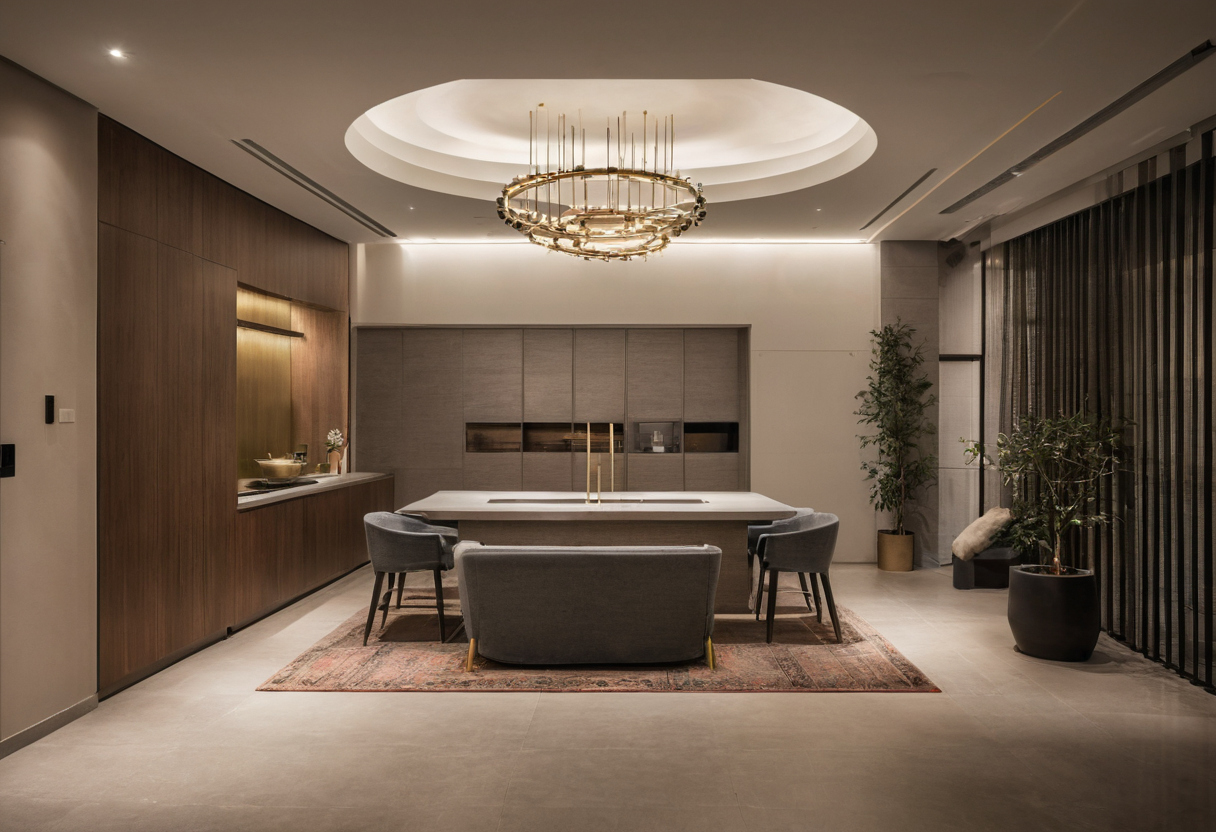
The contract must convert the chosen model into enforceable responsibilities shown with finish, fixture, and clearance relationships visible.
What contract type is best for a design-and-build villa?
Match the price basis to design maturity. A lump sum suits coordinated drawings, schedules and defined allowances. Cost-reimbursable or target-cost structures can suit evolving work but require open-book records. Measured pricing can suit renovation quantities that cannot be confirmed before opening existing construction.
State the document hierarchy, including the agreement, conditions, scope, drawings, specifications, schedules, responsibility matrix, price breakdown, programme and approved clarifications. Define provisional sums, owner-supplied items and nominated products.
Variation control must record cost, time, and design consequences
- Record the request to establish its reason and origin.
- Obtain a quotation to show cost, programme and technical effects.
- Review the interfaces to identify consequences for other packages.
- Issue written approval to create an authorised instruction and update the final account.
Payment and retention should follow verified deliverables
Link payment to approved design, secured procurement, verified installation, testing, handover and defect correction. Obtain Saudi-qualified legal and quantity-surveyor review before signing, particularly for amended international forms, bilingual documents and liability provisions.
Procurement, commissioning, and warranties expose hidden delivery gaps
Control every specialist package from design freeze to warranty registration. Imported items, concealed services and supplier exclusions often reveal gaps that were invisible in the initial proposal.
Long-lead orders need design freezes and release authority
- Freeze the design to confirm dimensions, finishes, performance, service connections and maintenance access.
- Approve the package to confirm suitability for Riyadh heat, ultraviolet exposure, dust, intensive air-conditioning and cleaning.
- Release the order through a named authority so deposits, later changes and delay consequences are recorded.
- Assign procurement risks to identify responsibility for freight, customs clearance, storage, transit damage and replacement lead times.
- Verify mobilisation permissions to prevent an unapproved service route. For an eligible domestic-services permit, the Ministry of Municipalities and Housing describes selecting the relevant licence, entering permit and employee information, and submitting the application for municipal review.
- Inspect before closure to verify waterproofing, ducts, pipes, cables, controls and access panels before finishes conceal them.
- Test each system to create records for HVAC, lighting controls, automation, water systems and specialist equipment.
- Register warranties to preserve serial numbers, supplier contacts, care instructions, spare parts and claim procedures.
Commissioning must be planned before finishes conceal the services
Define witnesses, test records, failed-test procedures and retesting responsibility in the inspection and test plan. Classify defects as design, installation, manufacturing, misuse or maintenance related so correction follows the responsible party rather than becoming a general dispute.
Villa owners should verify capability before appointing a Riyadh fit-out company
Verify the contracting entity, permitted activities, named team, insurance, workload, comparable villas and subcontractors before appointing fit out companies in Riyadh. Test operational capacity, not the polish of the sales presentation.
What should owners ask interior fit-out companies in Riyadh?
- Confirm the legal entity to identify who signs the contract and receives payment.
- Name the delivery team to establish responsibility for design, engineering, procurement, site management, commissioning and defects.
- Request working documents to inspect the programme, responsibility matrix, submittal register, variation form and handover index.
- Check comparable references to assess relevant scope, complexity, completion record and current workload.
Use these questions to ask an interior designer to clarify design authorship and site involvement. Red flags include unnamed engineers, missing shop-drawing duties, unclear exclusions, advance-heavy payments, uncontrolled substitutions and warranties split across several parties.
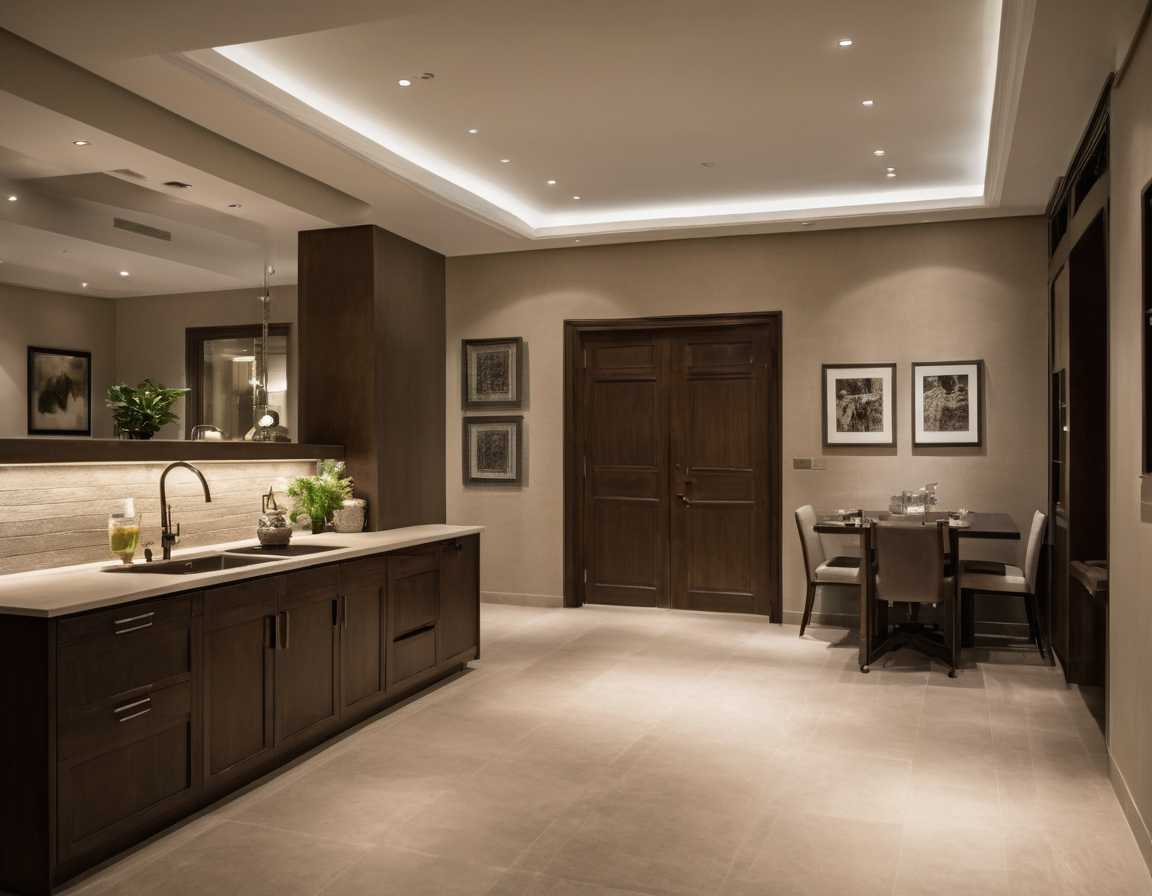
Villa owners should verify capability before appointing a Riyadh fit-out company shown with finish, fixture, and clearance relationships visible.
Frequently asked questions
Is design-and-build always cheaper than separate appointments?
No. Design-and-build may reduce interfaces and programme time, but value depends on scope completeness, design quality, allowances, exclusions and substitution controls.
Who is responsible for shop drawings and MEP coordination?
The signed contracts should answer this directly. Typically, the contractor prepares and coordinates shop drawings while designers and engineers review them within their disciplines without automatically accepting construction liability.
Can an owner buy kitchens, lighting and joinery directly?
Yes, provided the appointments allocate measurement, builders’ work, delivery, storage, installation, testing, damage and warranty responsibility.
What should an owner do before signing?
Define the villa brief, choose the delivery model, issue a responsibility matrix, compare aligned proposals, obtain Saudi-qualified legal and technical review, and sign all appointments before releasing design, procurement or site work.